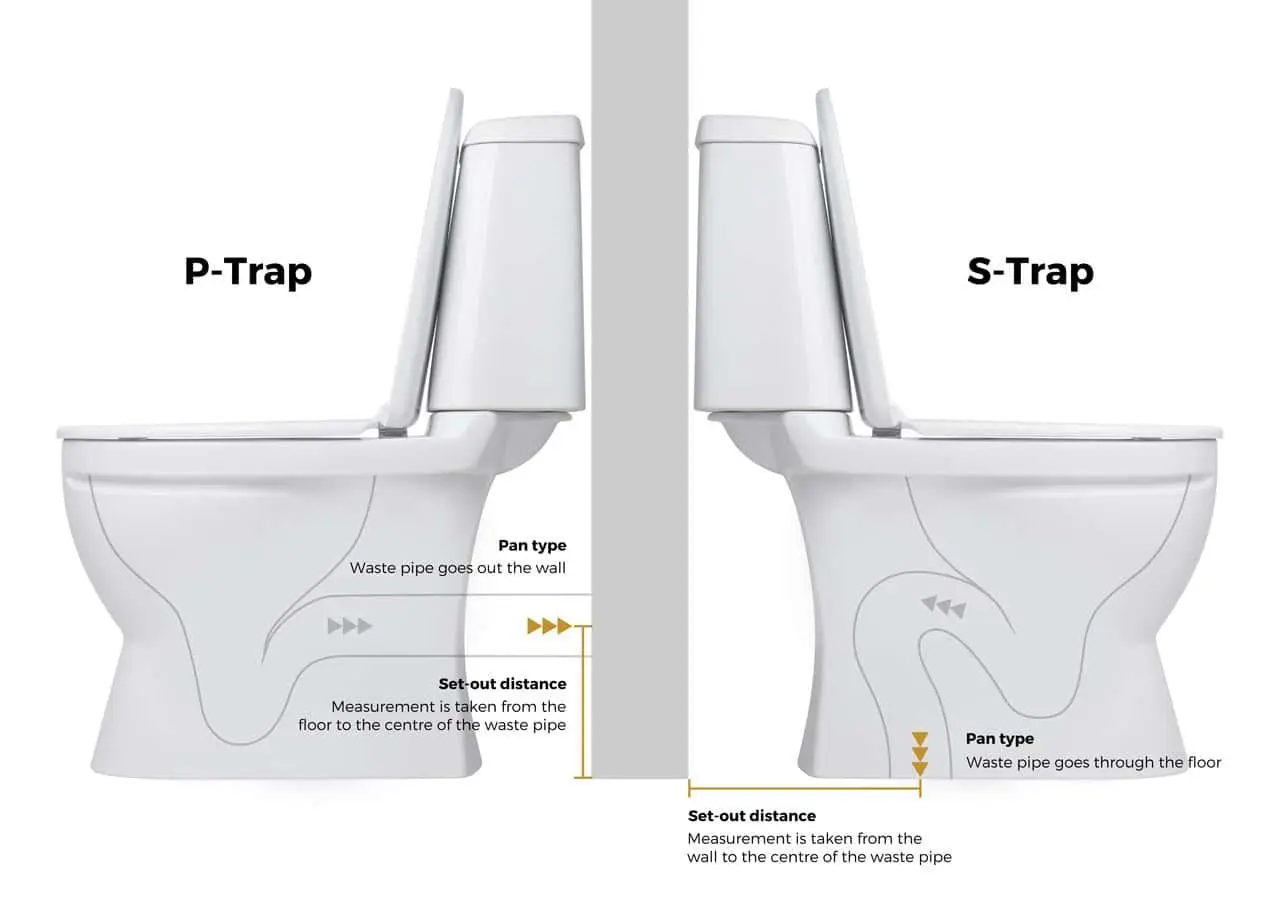
When sourcing toilets for different countries, understanding the difference between an S Trap vs P Trap toilet is essential for importers, distributors, wholesalers, and construction project buyers. The main difference lies in the waste outlet direction: an S Trap toilet connects to a floor drainage pipe, while a P Trap toilet connects to a wall drainage pipe.
Choosing the wrong toilet trap configuration can lead to installation incompatibility, additional plumbing costs, and delays in construction projects. Therefore, buyers should consider local drainage systems, installation dimensions, building requirements, and market preferences before placing bulk orders.
Whether you are looking for wholesale toilets, project-ready sanitary products, or an OEM toilet manufacturer for your brand, understanding these two drainage configurations is a practical starting point.
What Is the Difference Between S Trap and P Trap Toilets?
S Trap and P Trap toilets are two common toilet drainage configurations. Their main distinction is the direction in which wastewater exits the toilet and connects to the building’s drainage system.
What Is an S Trap Toilet?
An S Trap toilet features a downward-facing waste outlet that connects to a drainage pipe installed in the floor. Its drainage pathway typically follows a vertical connection beneath the toilet, making it suitable for buildings where the soil pipe is positioned below the floor.
Key characteristics include:
- Floor Drainage Connection: The waste outlet connects vertically to the floor drainage pipe.
- Common Installation: Frequently used in floor-mounted toilet installations.
- Important Measurement: The S Trap rough-in distance is measured horizontally from the finished wall to the center of the floor drain outlet.
- Application: Suitable for residential bathrooms, apartments, hotels, and other buildings designed with floor drainage.
S Trap toilets are often selected for replacement projects where existing floor drainage connections need to be maintained.
What Is a P Trap Toilet?
A P Trap toilet features a horizontally positioned waste outlet that connects to a drainage pipe installed in the wall. Instead of discharging wastewater downward into the floor, the toilet connects backward to the wall drainage system.
Key characteristics include:
- Wall Drainage Connection: The waste outlet connects horizontally to a wall-mounted drainage pipe.
- Installation Options: Available in certain floor-mounted and wall-hung toilet configurations.
- Important Measurement: The P Trap outlet height is measured vertically from the finished floor to the center of the wall drainage connection.
- Application: Commonly used in buildings designed with horizontal wall drainage.
P Trap toilets are particularly relevant for projects where the plumbing system is designed to accommodate rear outlet connections.
S Trap vs P Trap Toilet: Key Differences Compared
For wholesale buyers and sanitary ware distributors, comparing the two configurations helps determine which toilet models are compatible with their target markets.
| Comparaison | S Trap Toilet | P Trap Toilet |
|---|---|---|
| Outlet Direction | Vertical / Downward | Horizontal / Rear |
| Drainage Connection | Floor Drainage | Wall Drainage |
| Installation | Connected to floor pipe | Connected to wall pipe |
| Key Measurement | Wall-to-drain center distance | Floor-to-outlet center height |
| Common Applications | Toilettes au sol | Floor-mounted and wall-hung configurations |
| Main Consideration | Floor drain position | Wall outlet position |
Which one is better?
Neither configuration is universally better. An S Trap toilet is appropriate for buildings with floor drainage, while a P Trap toilet is suitable for buildings with wall drainage. The most important factor is compatibility with the existing plumbing system rather than the perceived superiority of one design.
It is also important to understand that drainage configuration alone does not determine flushing performance. Flushing efficiency depends on the toilet’s internal trapway design, flushing system, water volume, and overall product engineering.
Which Toilet Trap Type Is Suitable for Different Markets?
Different countries have different building practices, plumbing layouts, and sanitary ware preferences. For international toilet importers, understanding these differences helps reduce sourcing risks and select products that match local installation requirements.
European Market – P Trap and Wall-Outlet Toilet Demand
In many European construction projects, wall drainage systems and concealed cistern installations are used, creating demand for P Trap and horizontal outlet toilet configurations. However, floor drainage remains present in many existing residential buildings and renovation projects.
For European distributors and project buyers, consider:
- P Trap Compatibility: Confirm wall outlet height and connection dimensions.
- Wall-Hung Toilet Options: Evaluate concealed cistern compatibility and installation systems.
- Floor-Mounted Models: Maintain suitable S Trap options for projects with floor drainage.
- Local Standards: Verify product dimensions and relevant market requirements before importing.
Offering both drainage configurations can help distributors serve different building types and renovation requirements.
Middle East Market – Consider Both S Trap and P Trap Configurations
The Middle East includes diverse residential developments, commercial buildings, hotels, and large-scale construction projects. Drainage configurations can vary between countries, developers, and building designs. Therefore, buyers should not assume that one trap type is suitable for the entire region.
Important purchasing considerations include:
- Availability of S Trap and P Trap toilet models.
- Compatibility with project plumbing drawings.
- Durable ceramic construction and glaze quality.
- Flushing performance and water consumption.
- Consistent specifications for large-volume projects.
For hotel developers, sanitary ware distributors, and construction contractors, confirming drainage dimensions before bulk purchasing is particularly important.
Southeast Asian Market – S Trap Toilets for Floor-Drainage Installations
In many Southeast Asian residential and commercial buildings, floor drainage installations are widely encountered, making S Trap toilets an important product category for local distributors. However, newer developments and specific construction projects may also require wall outlet configurations.
Buyers should pay attention to:
- Common S Trap rough-in dimensions in their target market.
- Compatibility with existing floor drainage systems.
- Floor-mounted toilet designs.
- Product durability and ease of maintenance.
- Stable wholesale supply for regular replenishment.
For distributors serving multiple customer segments, maintaining a suitable selection of toilet configurations can improve product coverage.
What Should Importers Check When Sourcing S Trap and P Trap Toilets from China?
Finding a competitive wholesale toilet price is important, but product compatibility and manufacturing consistency are equally essential for long-term business relationships. When evaluating a Chinese toilet factory, consider these five areas.
Product Specification Consistency
The toilet outlet configuration, rough-in dimensions, product size, and connection details should match the approved specifications. For bulk orders, consistent specifications help distributors avoid installation complaints and unnecessary product returns.
Ceramic Quality and Glaze Finish
Toilet quality directly influences product appearance, durability, and customer satisfaction.
Importers should evaluate:
- Ceramic body quality.
- Glaze uniformity and surface finish.
- Dimensional accuracy.
- Surface defects and visible imperfections.
- Overall product consistency between batches.
Flushing Performance
A suitable drainage configuration should be supported by a well-designed flushing system. Buyers should evaluate the trapway structure, flushing performance, water consumption, and applicable testing requirements.
Product Range and Customization
A supplier with a diverse toilet product range can help importers develop a more competitive product portfolio.
Depending on the manufacturer’s actual capabilities, buyers may consider:
- Different toilet shapes and designs.
- One-piece and two-piece toilet models.
- Different drainage configurations.
- Customized colors and product specifications.
- OEM branding and packaging solutions.
Export Packaging and Bulk Delivery
Ceramic toilets are fragile products that require appropriate export packaging and transportation protection. Before ordering, confirm the packaging structure, loading arrangements, order quantities, production schedule, and delivery terms.
These factors are especially important for distributors managing recurring wholesale orders and large construction projects.
Why Choose South Villa for Your Ceramic Toilet Sourcing?
Le choix d'un produit fiable fabricant de cuvettes de WC en céramique is about more than finding a suitable product. Importers also need consistent product quality, clear specification communication, and dependable support throughout the purchasing process.
South Villa focuses on ceramic sanitary ware manufacturing and international B2B supply, supporting distributors, wholesalers, and project buyers with different toilet sourcing requirements.

Our cooperation advantages include:
- Ceramic Toilet Manufacturing: Product supply for different residential, commercial, and project applications.
- Product Selection Support: Assistance in identifying suitable toilet models according to product specifications and target market requirements.
- Services OEM et ODM : Support for brand-oriented product development and customization according to confirmed manufacturing capabilities.
- Approvisionnement pour commandes en gros : Cooperation with wholesale buyers, distributors, and engineering procurement teams.
- Export Service Support: Product communication, order coordination, and export packaging arrangements.