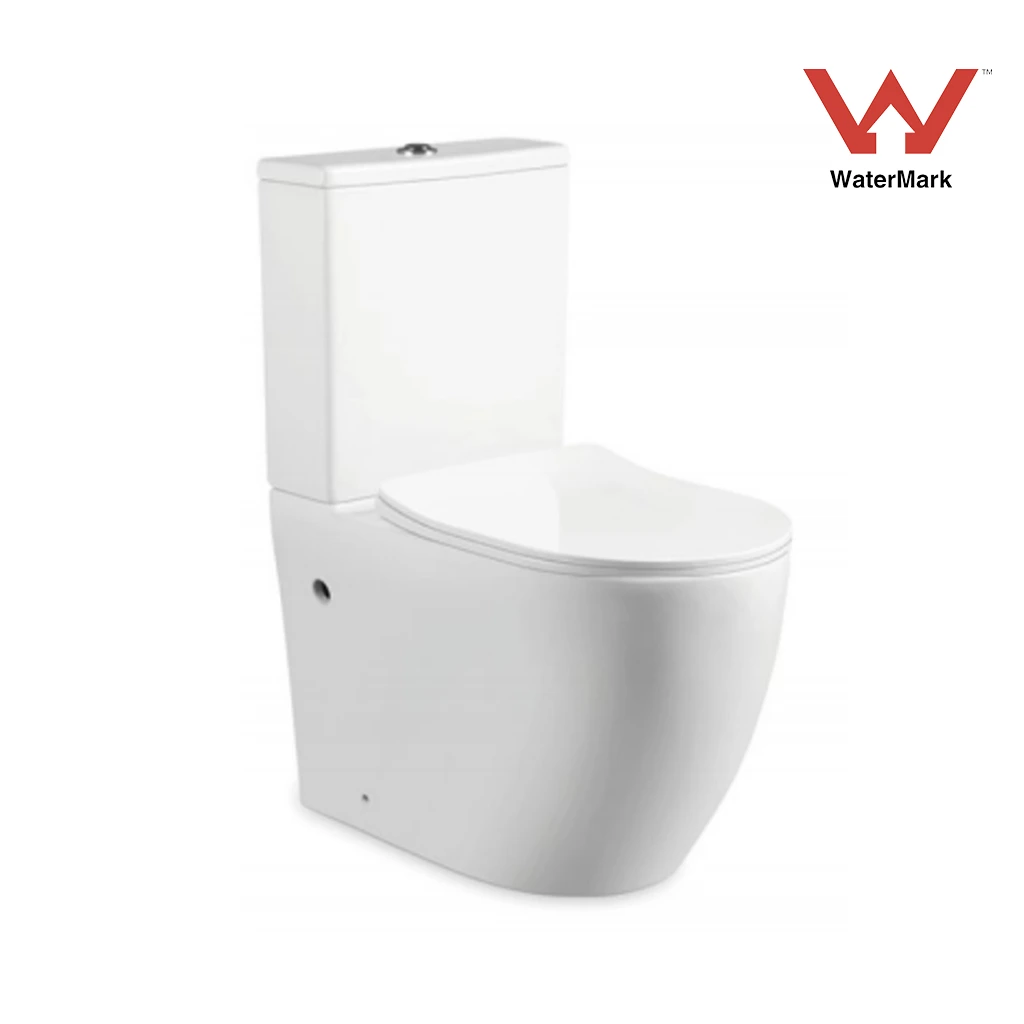






For importers, wholesalers, distributors, and project buyers, toilet quality is not only about surface appearance. A small defect in glaze, outlet size, installation holes, flatness, or ceramic deformation can become a serious business problem after shipment. Once products arrive at the destination market, even minor quality issues may lead to installation delays, customer complaints, replacement costs, and damage to the buyer’s brand reputation.
That is why a clear toilet quality inspection process is essential before shipment. At our sanitary ware factory, toilet QC is not treated as a final formality. It is a practical risk-control system designed to identify visible defects, dimensional problems, installation risks, and functional-area issues before the products leave production.
Today, I will walk you through how our ceramic toilet factory inspects wall-hung toilets and two-piece toilets before shipment, and how each QC step helps buyers reduce product defects, installation problems, and after-sales risks.
Why Toilet Quality Inspection Matters for B2B Buyers
Toilet defects can be divided into two major categories: visible defects and installation-related defects.
Visible defects include glaze dots, black spots, pinholes, accumulated glaze, uneven glaze waves, rough ceramic edges, and surface deformation. These issues affect the product’s visual grade and may cause complaints from retailers, project contractors, or end users.
Installation-related defects are often more serious. These include irregular outlet shape, inaccurate mounting holes, poor back-side flatness, deformed installation surfaces, unsuitable water inlet holes, and mismatched seat cover holes. These defects may not look dramatic during a quick visual check, but they can create real problems during installation.
For bulk buyers, one repeated defect can affect an entire shipment. For project buyers, inconsistent toilet dimensions can delay bathroom installation across hotels, apartments, villas, and commercial projects. For distributors and brand owners, poor QC can increase after-sales pressure and reduce repeat orders.
This is why working with a reliable wholesale ceramic toilet supplier is not only about price. Buyers need a manufacturer that understands how toilet defects translate into business risk.
Our QC Logic for Wall-Hung and Two-Piece Toilets
Different toilet types require different inspection priorities.
Wall-hung toilets need stronger attention to the back-side surface, mounting holes, flatness, wall clearance, water inlet hole, and installation stability. Since the toilet body is fixed to a concealed frame or wall-mounted system, even small dimensional errors can affect installation accuracy.
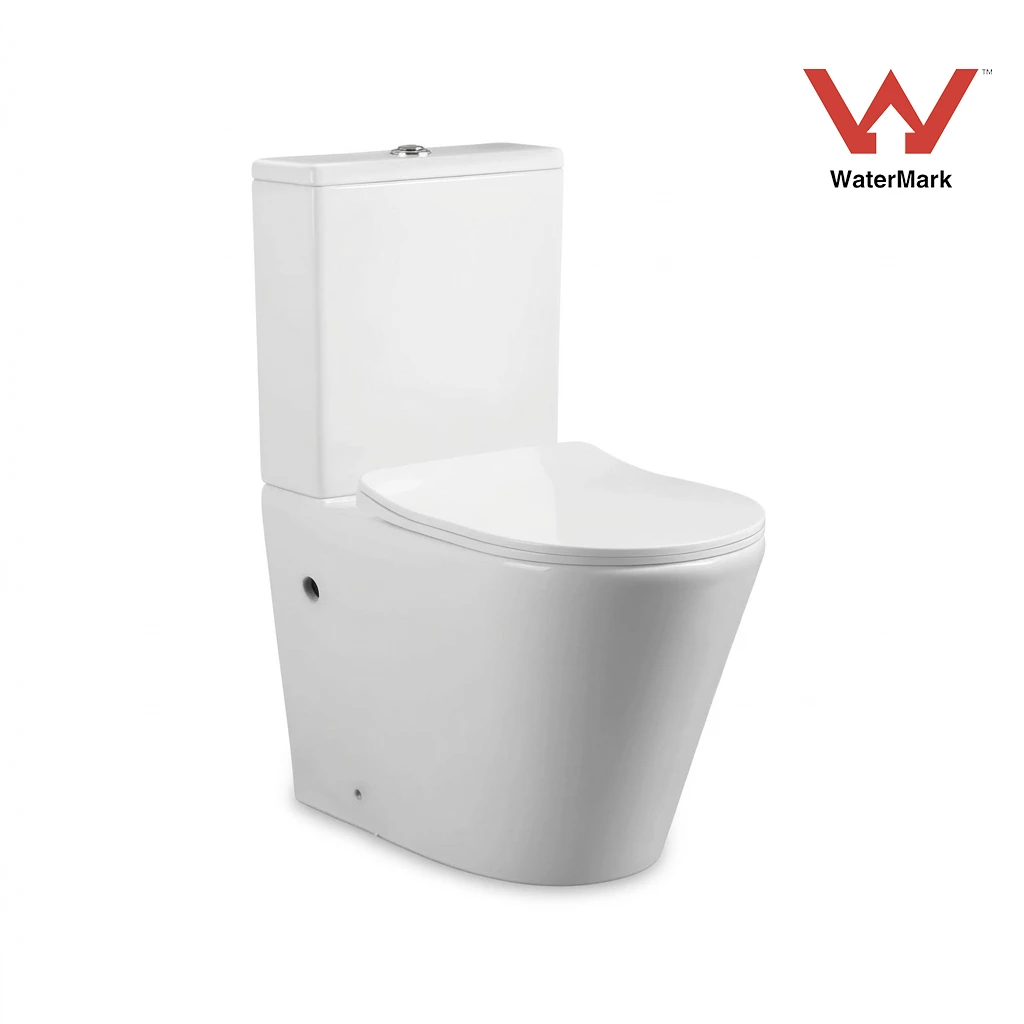
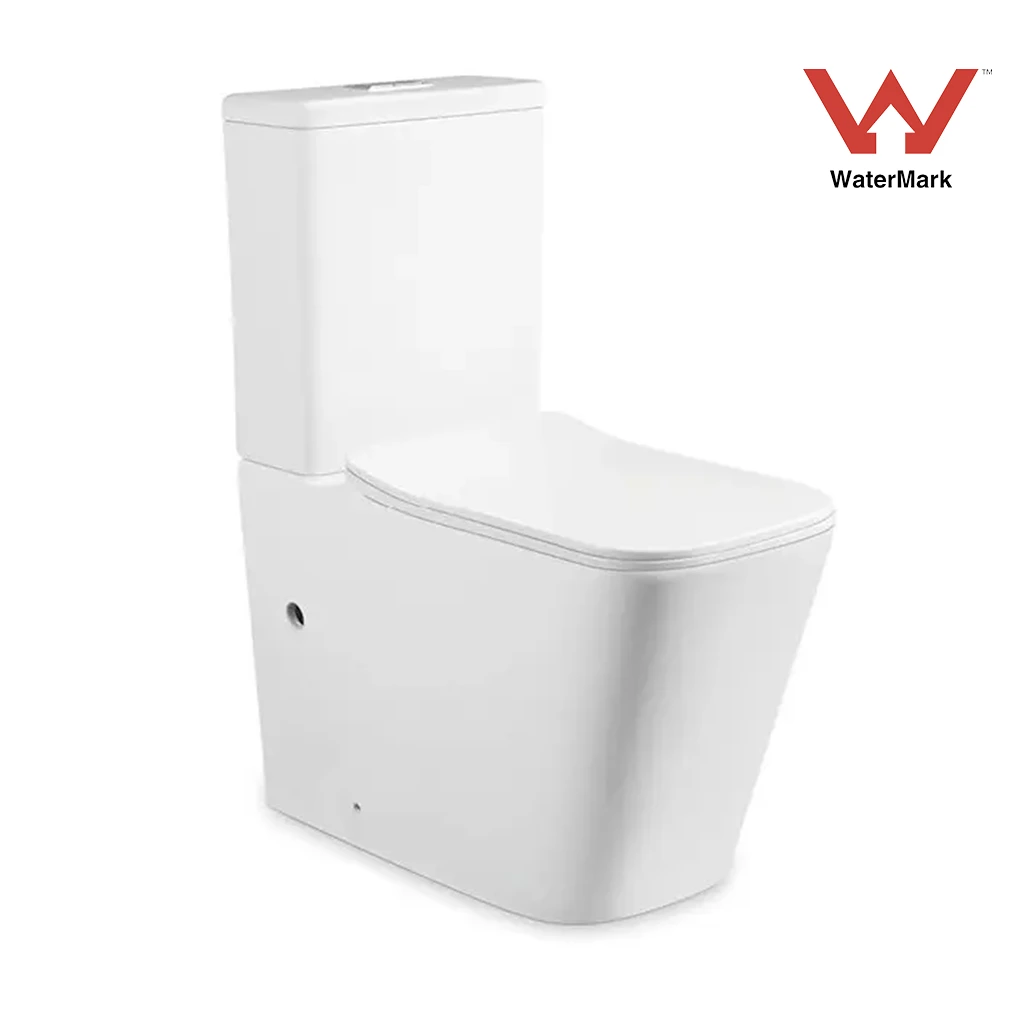
Two-piece toilets require careful inspection of the bowl surface, outlet shape, tank-related fitting areas, seat cover holes, wall gap, and overall deformation. Because the bowl and tank are installed as separate parts, dimensional consistency and stable fitting are important for smooth installation.
Our toilet QC process combines four types of checks:
Visual inspection for glaze, dots, pinholes, accumulated glaze, and ceramic edge condition.
Dimensional inspection for outlet shape, installation hole size, water inlet hole shape, and wall-related gaps.
Surface flatness inspection for seat surface, installation surface, and back-side areas.
Final pre-shipment review to reduce the chance of defective products entering bulk shipment.
For buyers sourcing from a wall-hung toilet manufacturer, this type of inspection system is especially important because wall-hung toilets have higher installation sensitivity than ordinary floor-mounted models.
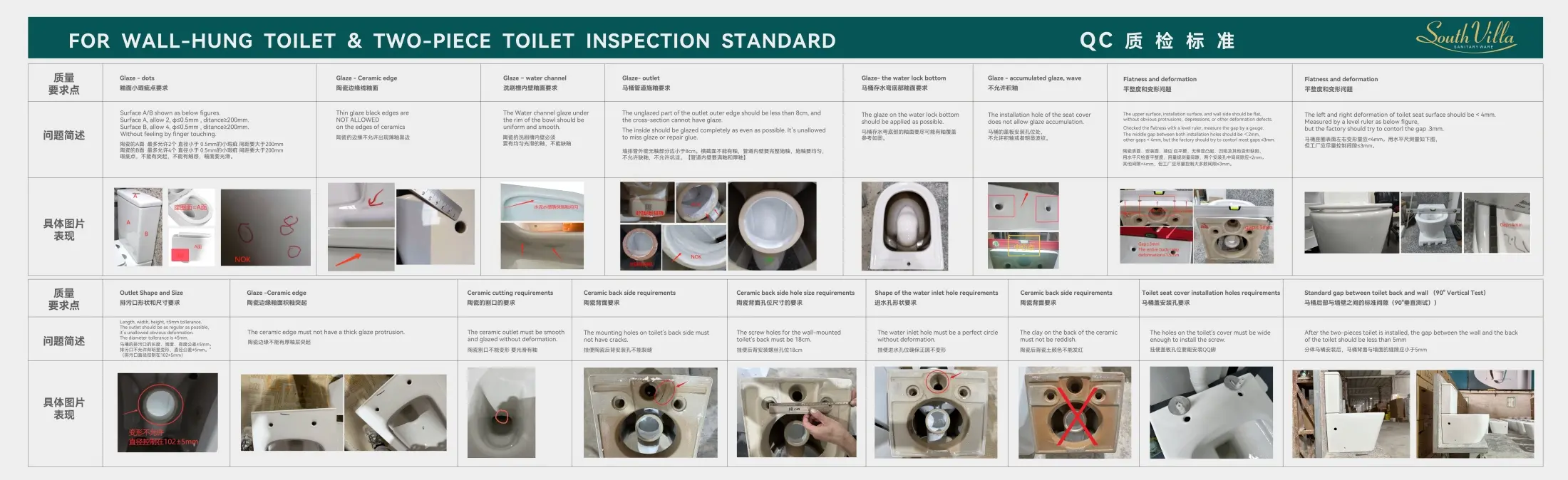
Step 1 — Glaze Surface Inspection to Control Visible Defects
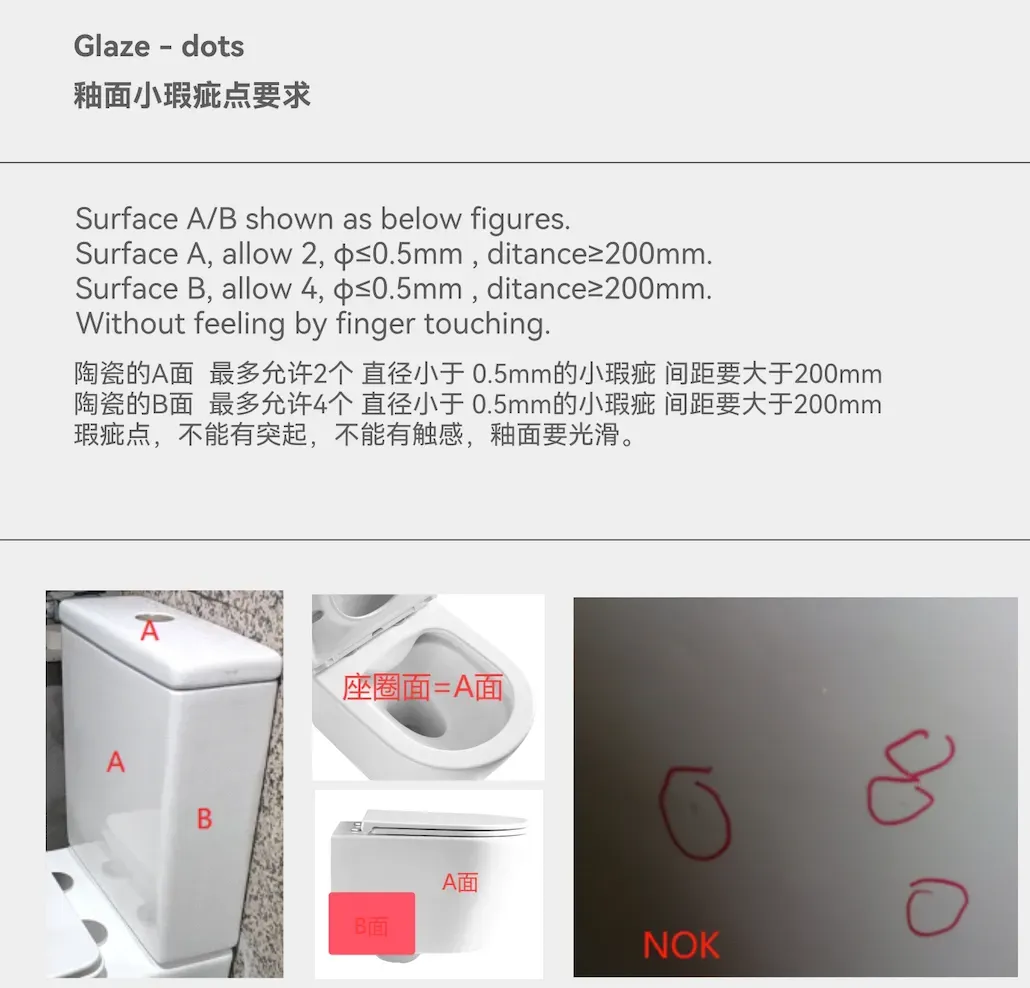
Glaze quality is one of the first things buyers and end users notice. However, glaze inspection should not be limited to whether the toilet “looks white and glossy.” A professional toilet glaze defect inspection must check specific surface areas and defect types.
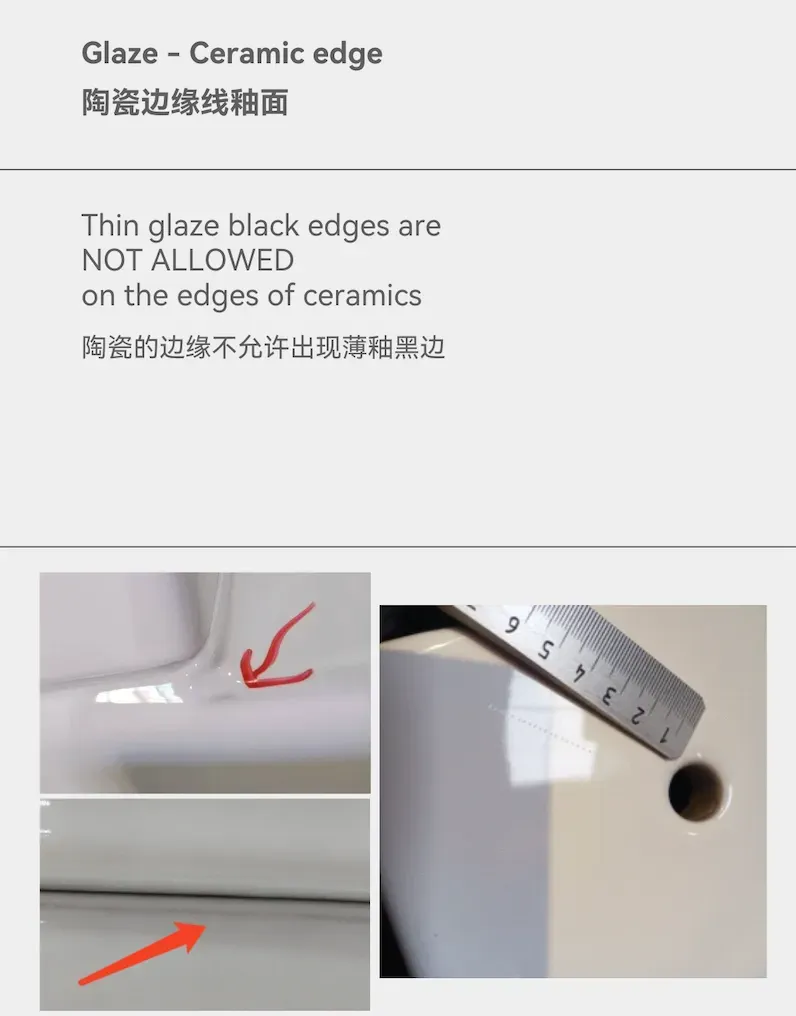
Our QC team inspects visible A/B surfaces, including the bowl surface, seat area, tank surface, exposed ceramic edges, and other front-facing areas. The key issues checked include glaze dots, black spots, pinholes, accumulated glaze, uneven glaze waves, and visible surface irregularities.
For ceramic toilets, it is not realistic or professional to claim that every product has absolutely zero natural production marks. Ceramic production involves firing, glazing, and shrinkage, which means inspection must be based on clear acceptance standards. The real QC value is controlling defects within agreed standards and preventing unacceptable products from being shipped.
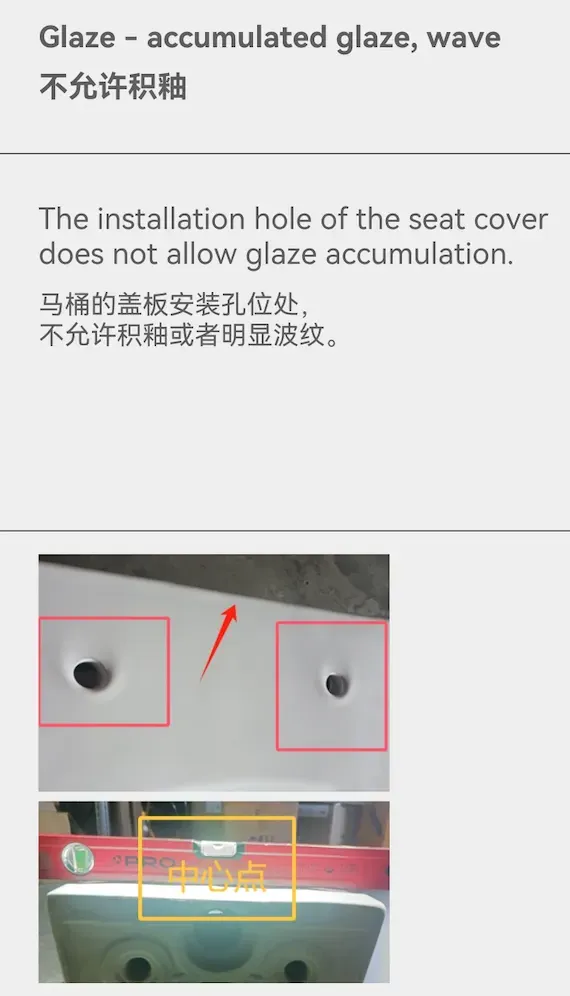
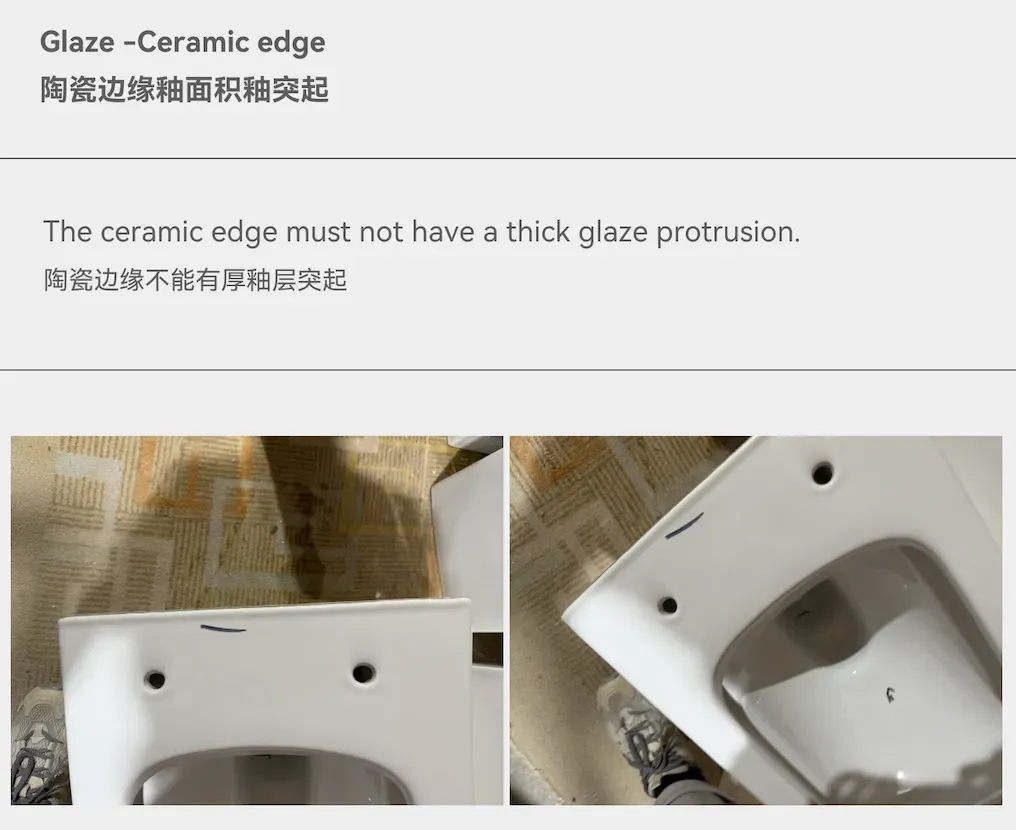
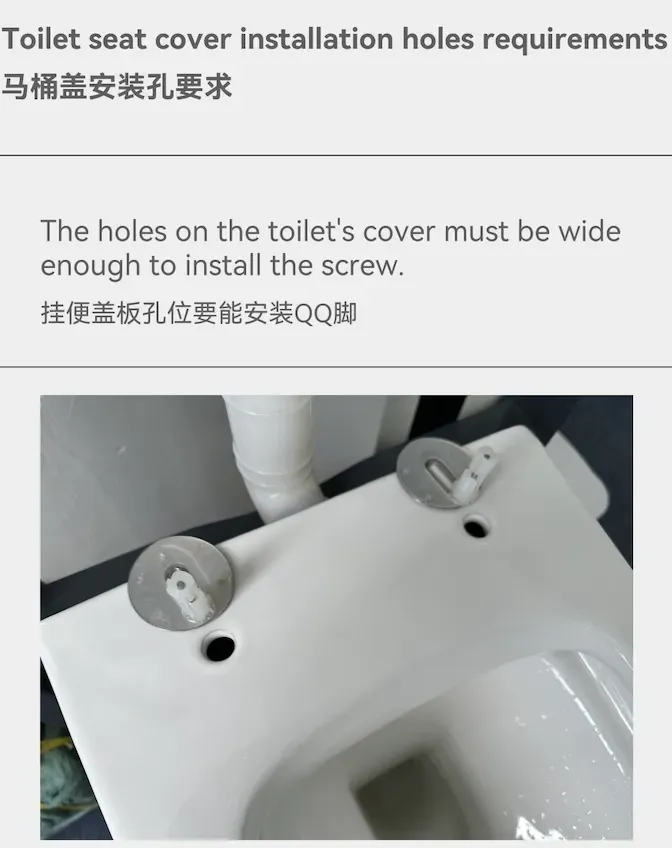
Glaze accumulation around the seat cover installation area also needs attention. If glaze builds up around installation holes, it may affect the assembly of accessories. This is a typical example of how a surface issue can become an installation issue.
For B2B buyers, glaze inspection protects more than appearance. It reduces the risk of retail rejection, brand complaints, and unnecessary replacement costs.
Step 2 — Ceramic Edge and Cutting Inspection
Ceramic edge quality is another important part of sanitary ware quality control. Thick ceramic edges, sharp edges, uneven cutting, or glaze protrusion may affect both appearance and installation.
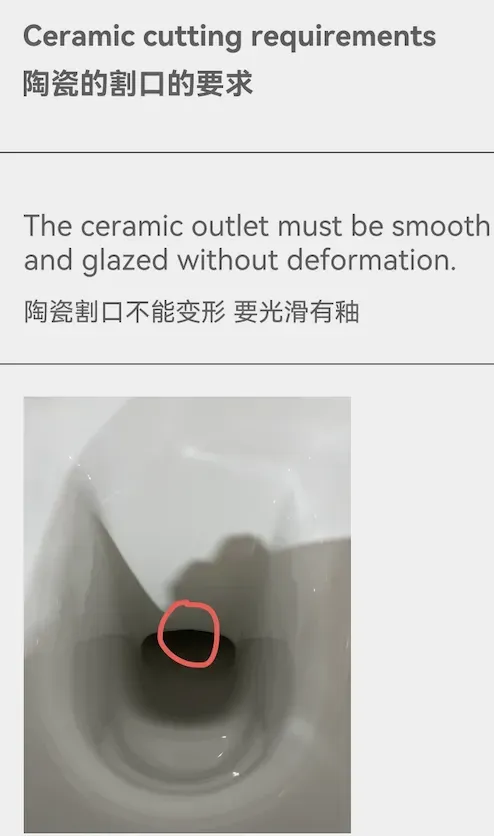
Our inspectors check whether the ceramic edge has excessive glaze buildup or thick protrusions. We also inspect cutting areas to see whether the surface is smooth, stable, and free from obvious deformation. For wall-hung toilets, the back-side and side edges are particularly important because they may affect how well the toilet fits the wall.
Poor edge finishing can create several risks. It may make the product look low-grade. It may affect sealing or fitting during installation. It may also increase the chance of complaints from contractors who need fast and consistent installation on site.
A serious toilet quality inspection process must check these details before shipment. Ignoring ceramic edge defects is a common mistake in low-level QC systems. The problem is not that the ceramic toilet factory did not inspect the toilet. The problem is that the inspection focused only on the front surface and ignored installation-related areas.
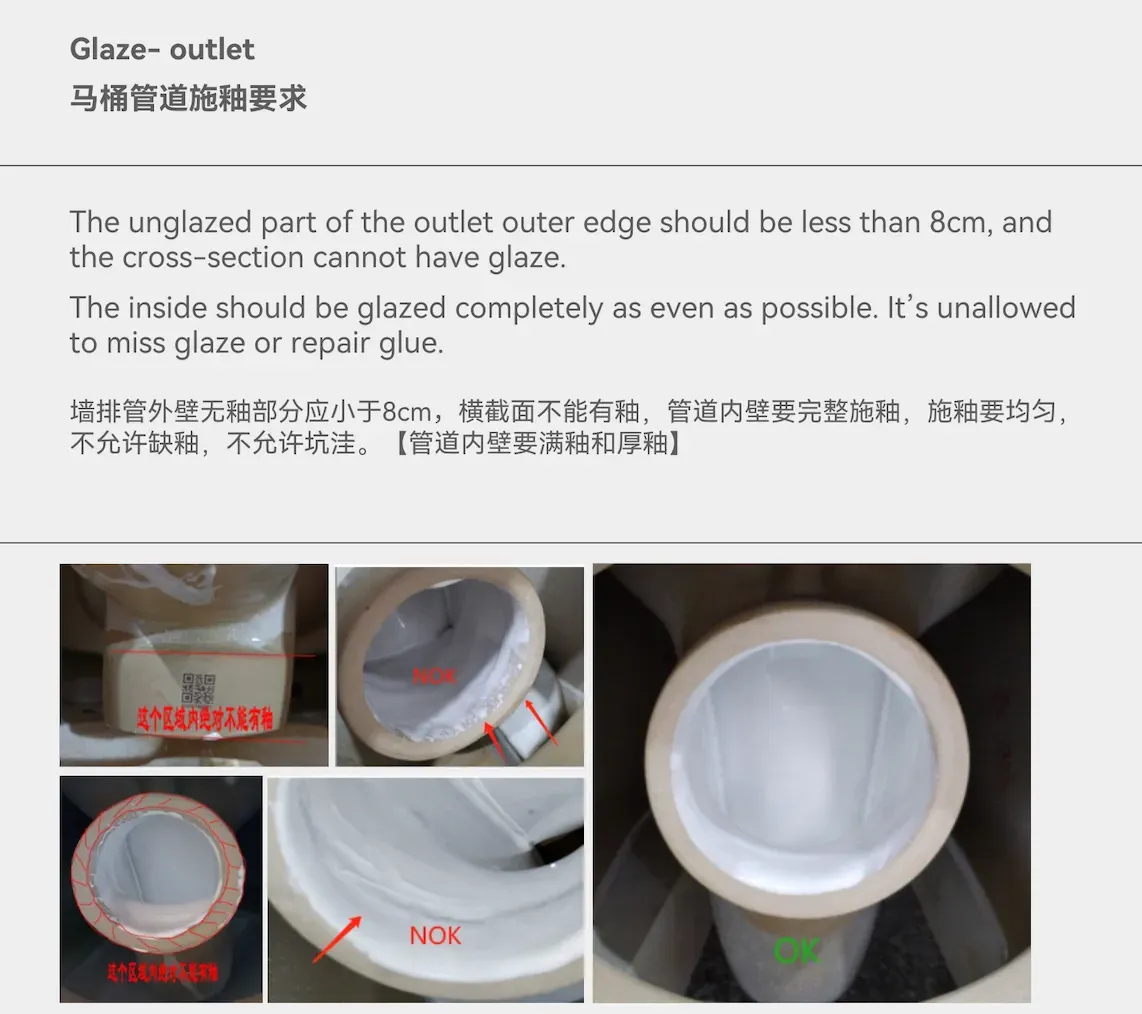
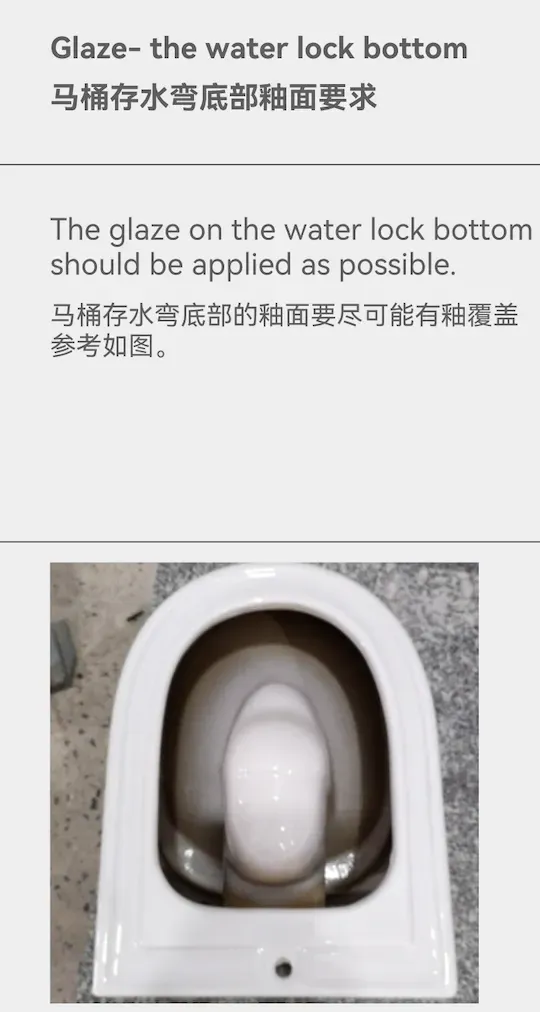
Step 3 — Water Channel, Water Lock, and Outlet Glaze Inspection
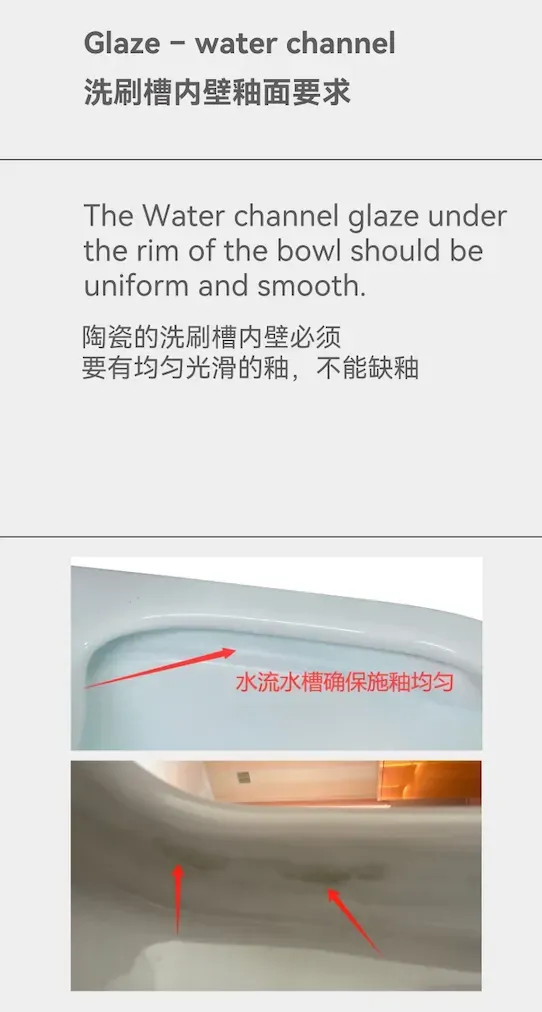
The inside functional areas of a toilet matter as much as the visible surface. These areas include the water channel, water lock bottom, and outlet glaze area.
Our QC team checks whether the glaze inside the water channel is smooth and properly applied. We also inspect the water lock bottom and outlet area to identify rough surfaces, missing glaze, excessive glaze accumulation, or irregular finishing.
This step is important because these areas are directly related to cleaning experience and product acceptance. Rough or poorly glazed surfaces may increase dirt accumulation and lead to quality complaints. However, a professional article should not overclaim flushing performance unless there is specific test data. The correct statement is that smooth and properly inspected functional glaze areas help support better product cleanliness and reduce obvious defect risks.
For importers and distributors working with a wholesale ceramic toilet manufacturer, this type of internal inspection shows whether the ceramic toilet factory is only checking what buyers can see at first glance or whether it is also controlling hidden functional areas.
Step 4 — Outlet Shape and Size Inspection
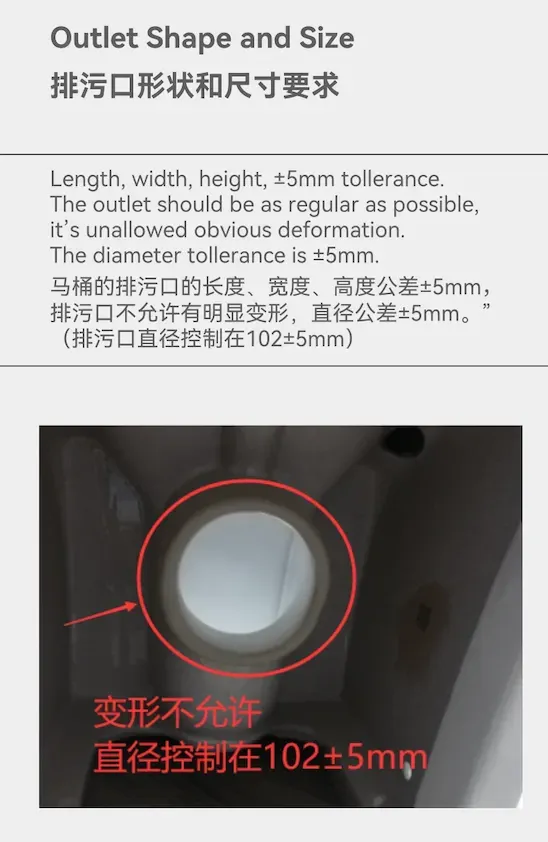
The outlet is one of the most critical functional areas in toilet QC. If the outlet shape or size is inconsistent, the buyer may face installation mismatch, drainage connection problems, leakage risks, or additional adjustment work on site.
Our inspectors check outlet shape, size, roundness, and tolerance. The outlet should be formed as consistently as possible and should not be heavily distorted. For bulk or project orders, consistency is more important than checking only one sample. A good toilet pre-shipment inspection must identify whether outlet-related issues are isolated or repeated across production.
Outlet inspection is especially important for hotels, apartments, residential buildings, and commercial bathroom projects. These projects require repeated installation of the same or similar toilet models. If the outlet is inconsistent, installers may need extra time for adjustment, and the buyer may face complaints from the project site.
This section is where many weak suppliers expose themselves. They talk about high-quality glaze and modern design, but they cannot clearly explain how they control outlet shape and installation dimensions. That is not enough for serious B2B procurement.
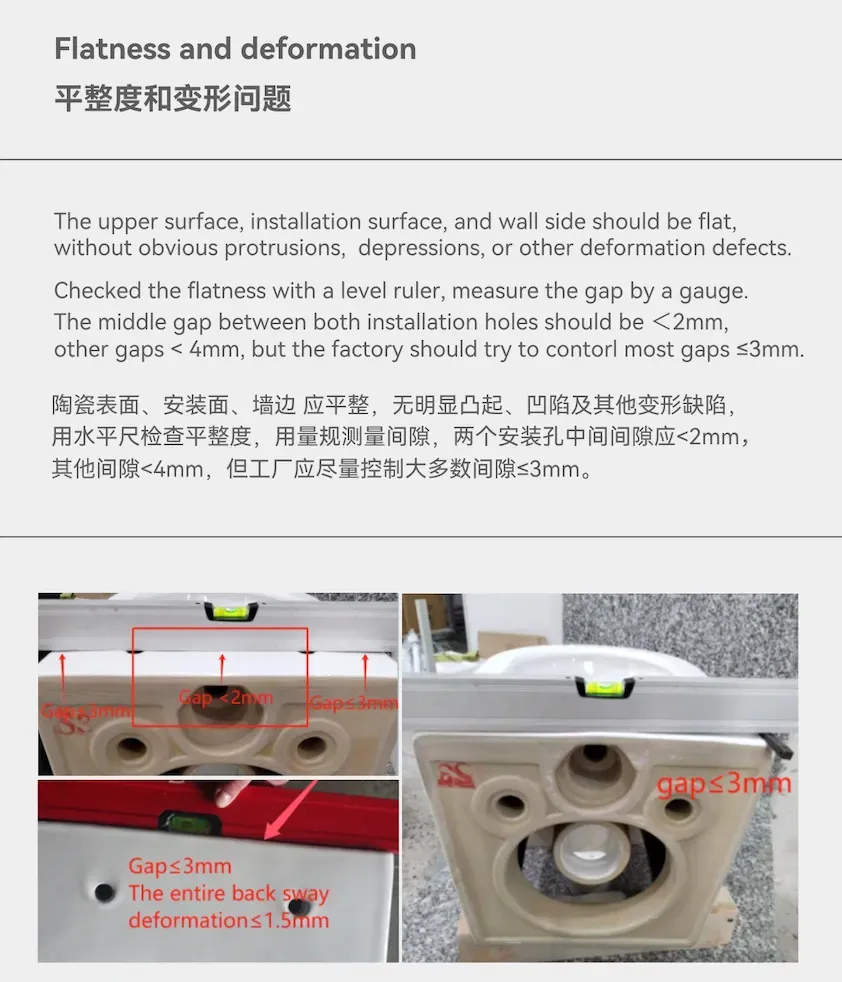
Step 5 — Flatness and Deformation Inspection
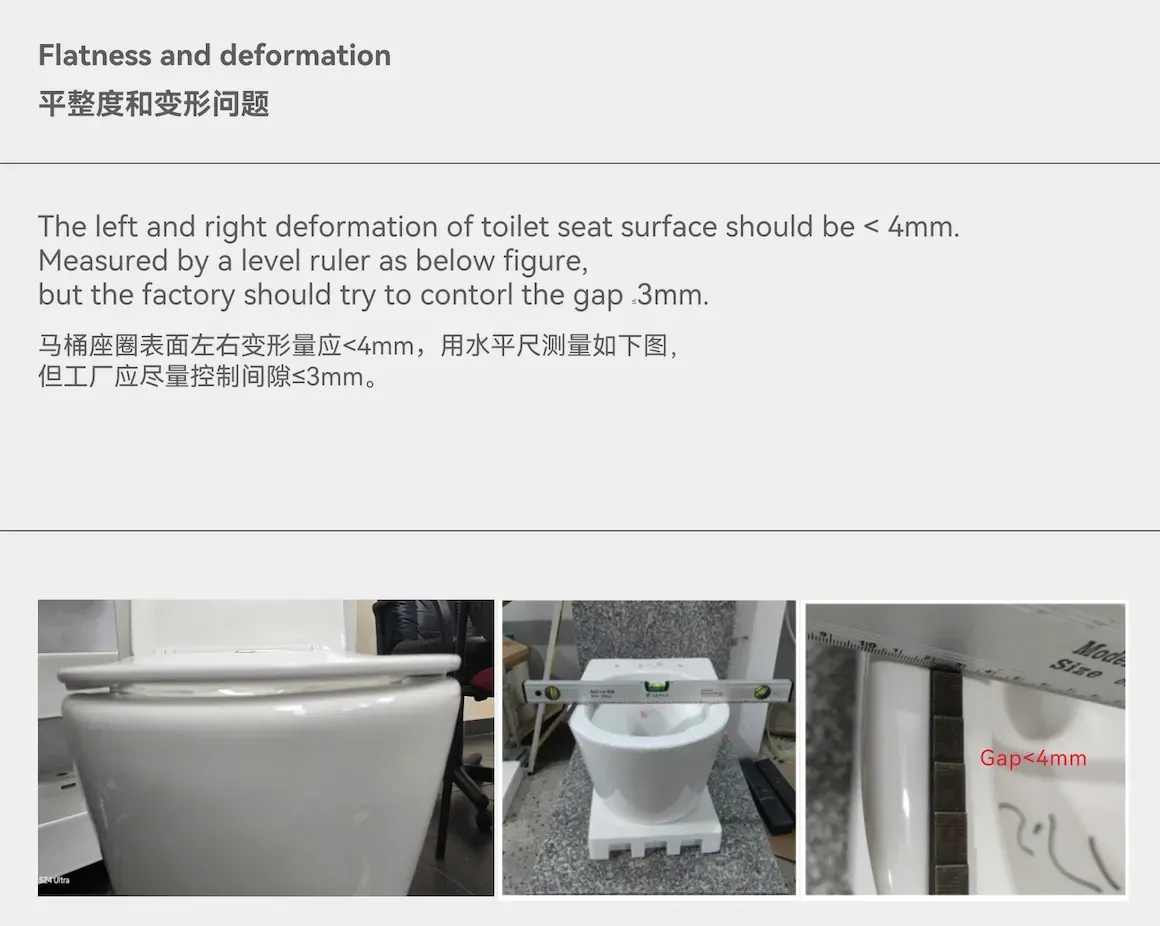
Flatness and deformation inspection helps reduce rocking, uneven installation, visible wall gaps, and poor fitting problems. Final wall gap verification will be further checked during the installation compatibility inspection stage.
Our QC team checks the upper surface, seat surface, installation surface, and wall-side surface depending on the toilet model. The inspection may involve visual checks, level tools, measuring gauges, or factory-defined inspection methods. The purpose is to identify deformation that may affect installation or final appearance.
Wall-Hung Toilet Flatness Inspection
For wall-hung toilets, back-side flatness is one of the most important QC items. The toilet must fit properly against the wall or installation frame. If the back side is uneven, the installed toilet may show an obvious gap, poor alignment, or unstable fitting.
Mounting surface accuracy also matters. Wall-hung toilets rely on secure installation, so the back-side ceramic body, screw holes, and surrounding surfaces must be checked carefully. A small defect in this area may create larger installation problems later.
This is why buyers should not evaluate a wall-hung toilet manufacturer only by catalog photos. Catalog photos show design. QC standards show whether the product can be installed consistently in real projects.
Two-Piece Toilet Deformation and Wall Gap Inspection
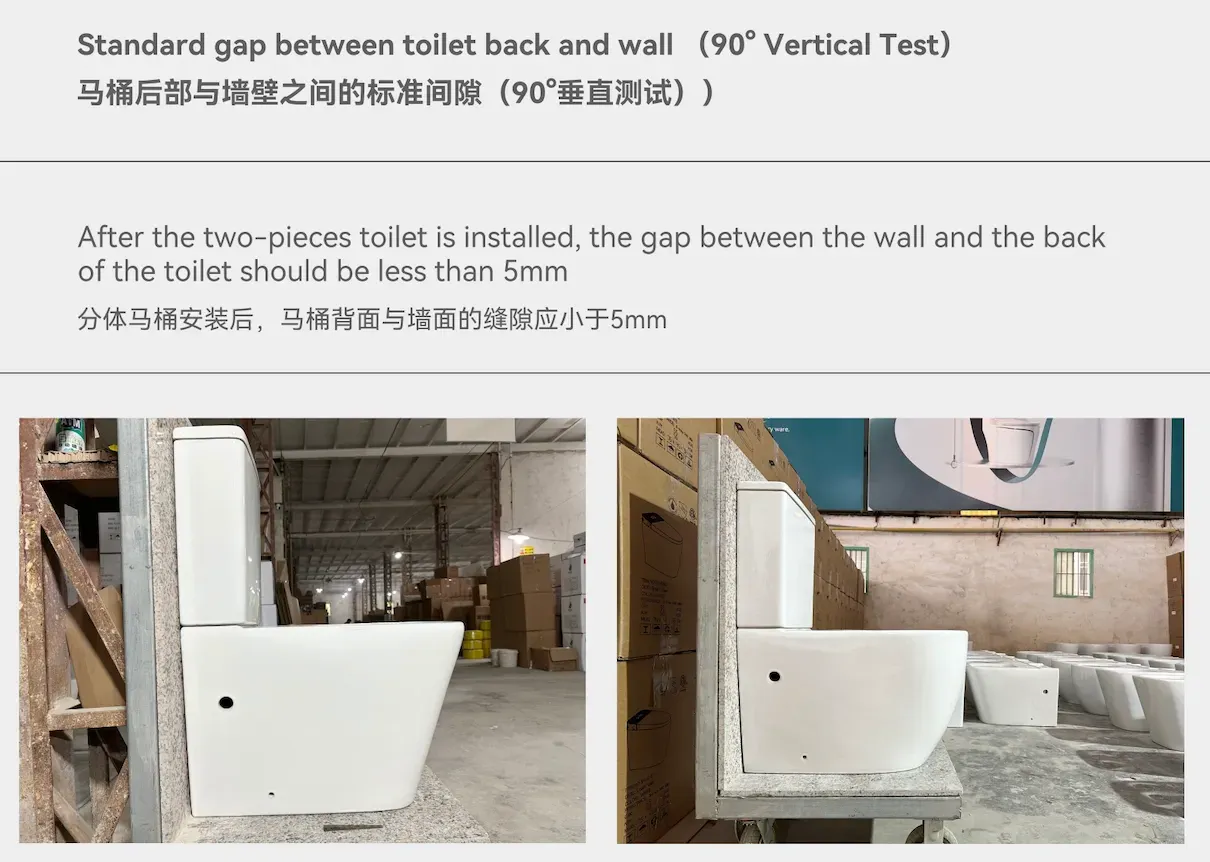
Two-piece toilets also require deformation and wall gap inspection. The back area, tank-related fitting area, and toilet seat surface should be checked to reduce installation issues.
If the toilet body is deformed, the final installation may look uneven. If the wall-side surface or back-side distance is inconsistent, the toilet may not align well in the bathroom layout. These issues can lead to complaints from contractors, retailers, or end users.
For buyers sourcing from a two-piece toilet supplier, deformation inspection is directly connected to project delivery stability. A low unit price means nothing if installation teams need extra time to fix repeated fitting problems.
Step 6 — Mounting Hole, Seat Cover Hole, and Water Inlet Inspection
Installation holes are small details, but they create big problems when they are wrong.
Our QC process includes checking wall-mounted screw holes, seat cover installation holes, and water inlet hole shape. For wall-hung toilets, mounting hole accuracy is critical because the toilet body must align with the installation system. For both wall-hung and two-piece toilets, seat cover holes must allow proper accessory installation.
If holes are too narrow, misaligned, deformed, or blocked by glaze accumulation, the buyer may face assembly failure before the product even reaches the end user. This creates rework, accessory mismatch, installation delay, and after-sales claims.
The water inlet hole should also be properly formed. A poorly shaped inlet hole may affect installation connection or create unnecessary adjustment work. These are not dramatic defects in product photos, but they matter in real procurement.
For OEM/ODM buyers, this is also where customized requirements become important. A custom ceramic toilet manufacturer should be able to discuss installation-related details with the buyer before bulk production, especially when the product is made for a specific market, accessory set, or project standard.
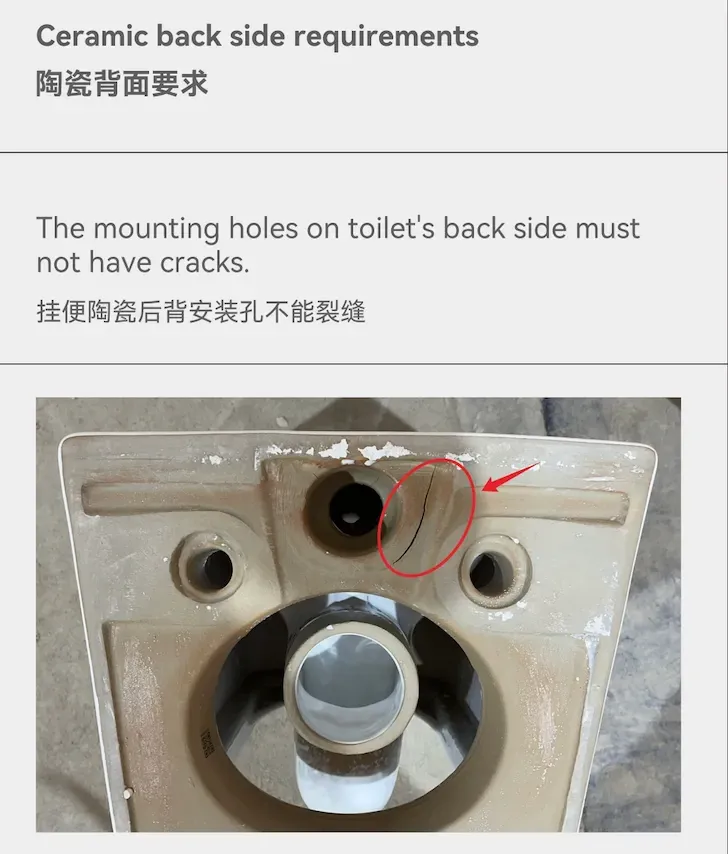
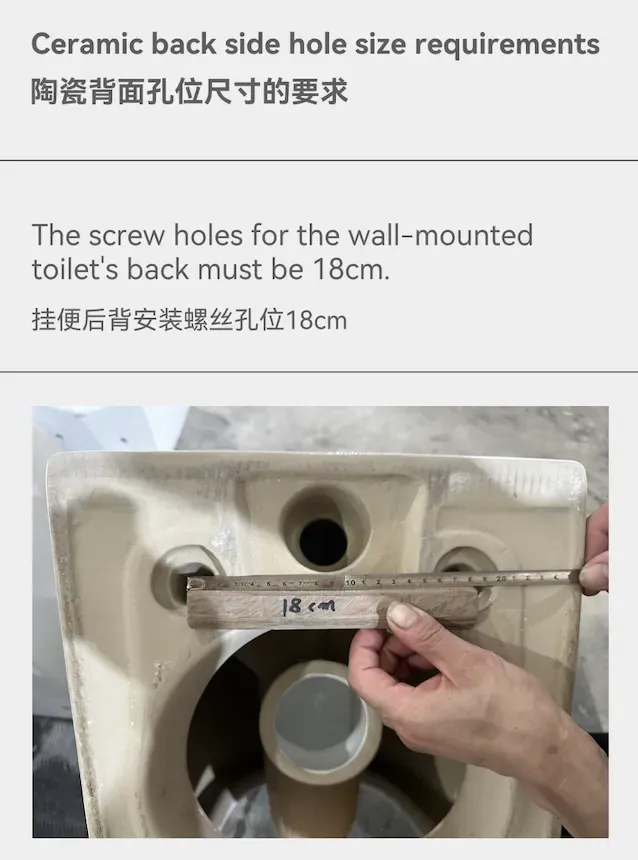
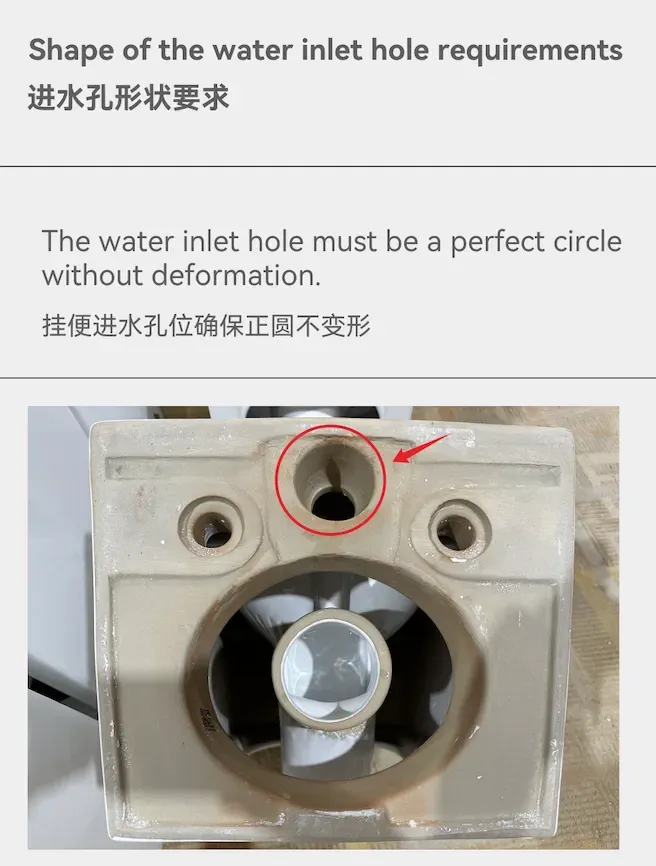
Step 7 — Back-Side Ceramic Body and Clay Surface Inspection
The back side of a ceramic toilet may not always be visible after installation, but it still needs inspection.
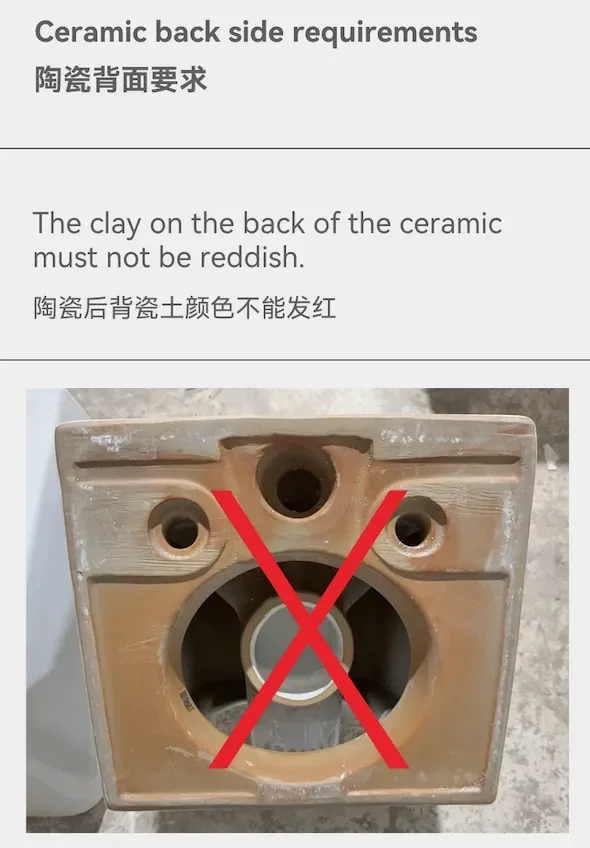
Our QC team checks back-side ceramic body condition, clay surface quality, rough areas, cracks, deformation, and unacceptable finishing defects. Hidden areas can still affect installation stability, handling safety, and buyer confidence.
Some factories make the mistake of focusing only on the front-facing surface. That is short-sighted. B2B buyers, especially importers and project contractors, care about whether the whole product is stable, installable, and consistent.
Back-side inspection also helps identify production issues before they become repeated shipment problems. If a certain defect appears frequently on the back side, it may indicate a process issue that needs correction before final packing.
Step 8 — Final Pre-Shipment QC Review
Before shipment, all inspection results should be reviewed as part of a complete toilet pre-shipment inspection process.
A typical final QC review includes:
- Glaze surface inspection
- Ceramic edge and cutting inspection
- Water channel and water lock inspection
- Outlet glaze and outlet size inspection
- Flatness and deformation check
- Mounting hole and seat cover hole inspection
- Back-side ceramic body inspection
- Final visual and installation-related review before packing
This final step helps reduce the risk of defective products entering cartons, pallets, or containers. It also gives buyers more confidence that the shipment has passed more than a basic appearance check.
For B2B buyers, the value is simple: fewer surprises after arrival.
How Our QC Process Reduces Buyer Risk
A strong toilet QC process should connect every inspection item to a buyer risk. Otherwise, it becomes an internal checklist with little commercial meaning.
| Potential Defect | Buyer Risk | QC Control Point |
|---|---|---|
| Glaze dots, pinholes, or black spots | Retail complaints and lower product acceptance | Glaze surface inspection |
| Accumulated glaze around holes | Seat cover assembly problems | Seat cover hole inspection |
| Irregular outlet shape | Installation mismatch or drainage connection issues | Outlet shape and size check |
| Poor back-side flatness | Wall gap or unstable wall-hung installation | Flatness and deformation inspection |
| Wrong mounting hole size | Installation failure or extra adjustment | Mounting hole inspection |
| Rough water channel glaze | Cleaning complaints or quality concerns | Water channel glaze inspection |
| Back-side ceramic defects | Handling, fitting, or buyer confidence issues | Back-side ceramic body inspection |
This is the real commercial purpose of sanitary ware quality control: reducing product defects before they become buyer costs.
A reliable wholesale toilet supplier should be able to explain how inspection steps reduce risks for importers, distributors, wholesalers, brand owners, and project contractors. If a supplier only says “our quality is good” but cannot explain the QC process, that is a warning sign.
Why Work with a Manufacturer That Has a Documented Toilet QC Standard?
Buyers should not judge a ceramic toilet factory only by price, catalog design, or sample appearance. Those factors matter, but they are not enough.
A documented toilet QC standard helps make quality control visible, repeatable, and buyer-oriented. It reduces communication gaps between the buyer and the factory. It also helps the factory team inspect products consistently across different batches.
For OEM/ODM projects, documented QC is even more important. Custom models, private-label orders, market-specific accessories, and project-based requirements may involve additional inspection points. Without a clear QC process, customization can easily create hidden risks.
For importers and distributors, QC consistency protects repeat sales. Your customers may not know which factory produced the toilet, but they will remember product problems under your brand or distribution channel. That is why quality control is not only a factory issue. It is part of your market reputation.
Conclusion
A professional toilet quality inspection process is not just a factory management task. It is a buyer risk-reduction system.
For wall-hung toilets, QC must focus on back-side flatness, mounting holes, wall clearance, outlet quality, and installation stability. For two-piece toilets, inspection should cover glaze quality, outlet shape, deformation, seat cover holes, tank-related fitting areas, and wall gap control.
The purpose is not to make empty claims about “strict quality.” The purpose is to reduce the real problems that buyers face after shipment: defective products, difficult installation, customer complaints, project delays, and after-sales costs.
For importers, wholesalers, distributors, brand owners, and project contractors, choosing a manufacturer with a clear sanitary ware quality control process, like South Villa, is one of the most practical ways to protect order value and long-term market reputation.